Is it time to build your wine cellar?
It’s a drinker’s market. Global wine quality has never been better and prices are “mouthwatering” after a 34-month downturn, suggests Sebastian Thomas, CEO of Ripley Wines. But is it a good time to invest? Some argue that prices are starting to bottom out.
Exempt from capital gains tax, fine wine has many attractions as an alternative asset. Private collectors don’t pay duty or VAT on wine in bonded storage. Unlike many collectables, it has 25 years’ worth of trading data and market benchmarks to help gauge performance — such as the Liv-Ex indices.
Chapter One
A bubble that shouldn't have happened
The market hit all-time highs in early 2022, thanks to a perfect storm of factors.
“Liv-Ex’s Burgundy 150 index was outperforming the Nasdaq by 30% … that really shouldn’t have happened.”
Callum Woodcock Founder and CEO of WineFi
With rock-bottom interest rates, buyers were willing to take on more risk. Prices were also driven by lockdowns.
People weren’t spending on holidays or going out. They had more disposable income, and were drinking more. We also saw an almost childlike collector mentality, with a boom in many collectables — wine fell into that. — Robbie Stevens, Liv-Ex’s Head of Broking
It didn’t last. The bottom of the bottle? Data suggests recovery may be on the way: WineFi data shows that trade prices climbed 4.3% in Q3 of 2025, marking the first quarterly rise since 2022. Trade discounts to list prices have narrowed and auction activity has been stronger. Robbie says indices have been rising about 1% each month since September. This might be attributable to more certainty returning to the market after Trump threatened 200% tariffs on EU alcohol in 2025. It has since been reduced to 15%.
“After three years of downturn, prices look appealing,” Robbie notes. “The fine wine market has some big collectors with deep pockets. If enough start buying, that can catalyse a further recovery. Traditional markets have been hitting all-time highs recently — and wine markets may also benefit from new wealth creation.”
“There is a strong argument that if you are looking to re-enter the market, now could be a good time. You can’t time the bottom, but there are green shoots appearing.”
Callum Woodcock Founder and CEO of WineFi
Not everyone is so optimistic. Sebastian suggests “it is premature to say that we have reached the bottom. There is still a lot of wine on the secondary market that has to clear before the market recovers. I hope to see that in 2027.”
Chapter Two
Where to invest
For those looking to invest, long-term ageing potential is a crucial consideration, says Thomas Delande, a Private Client Sales Executive at Ripley Wines. The last few years show stark price divergences. Even after recent falls, Burgundy wines saw annualised gains of around 15% per year since 2011, compared to 11% for Champagne and 4% for Bordeaux, says Callum. Sebastian notes that “for the rarest wines, demand is still strong — a case of 1999 Roumier Musigny, for example, would attract huge interest.”
Beyond the superstars of the wine world, it’s important to consider the outlook for different regions. As with any investment, caution is required. Robbie suggests that the downturn has created a “flight to quality, with buyers reverting to traditional blue-chip names”. These areas may be safer for market novices. Buyers also need to be aware of bad actors in an unregulated market: there are some unscrupulous merchants promising huge returns with zero risk.
Explore the Regions
Chapter Three
Building a cellar
A serviceable private cellar, our colleagues in wealth planning tend to say, begins at around £25,000 and becomes interesting north of £100,000. Below the former, concentration risk is unavoidable; above the latter, diversification across vintage, region and drinking-window becomes possible. A case — twelve bottles — is the smallest unit of liquidity, because it is the smallest unit the trade will readily quote on.
“The best cellars are deeply personal, but also constructed with an eye to future potential value.”
Thomas Delande Private Client Sales Executive, Ripley Wines
Storage matters more than buyers tend to expect. In-bond, temperature-controlled warehousing is the quiet determinant of long-run return: wine stored at home may be enjoyed more often, but it will rarely clear at auction. Insurance, provenance and impeccable paperwork separate a collection from a cupboard.
Chapter Four
Passing on your legacy
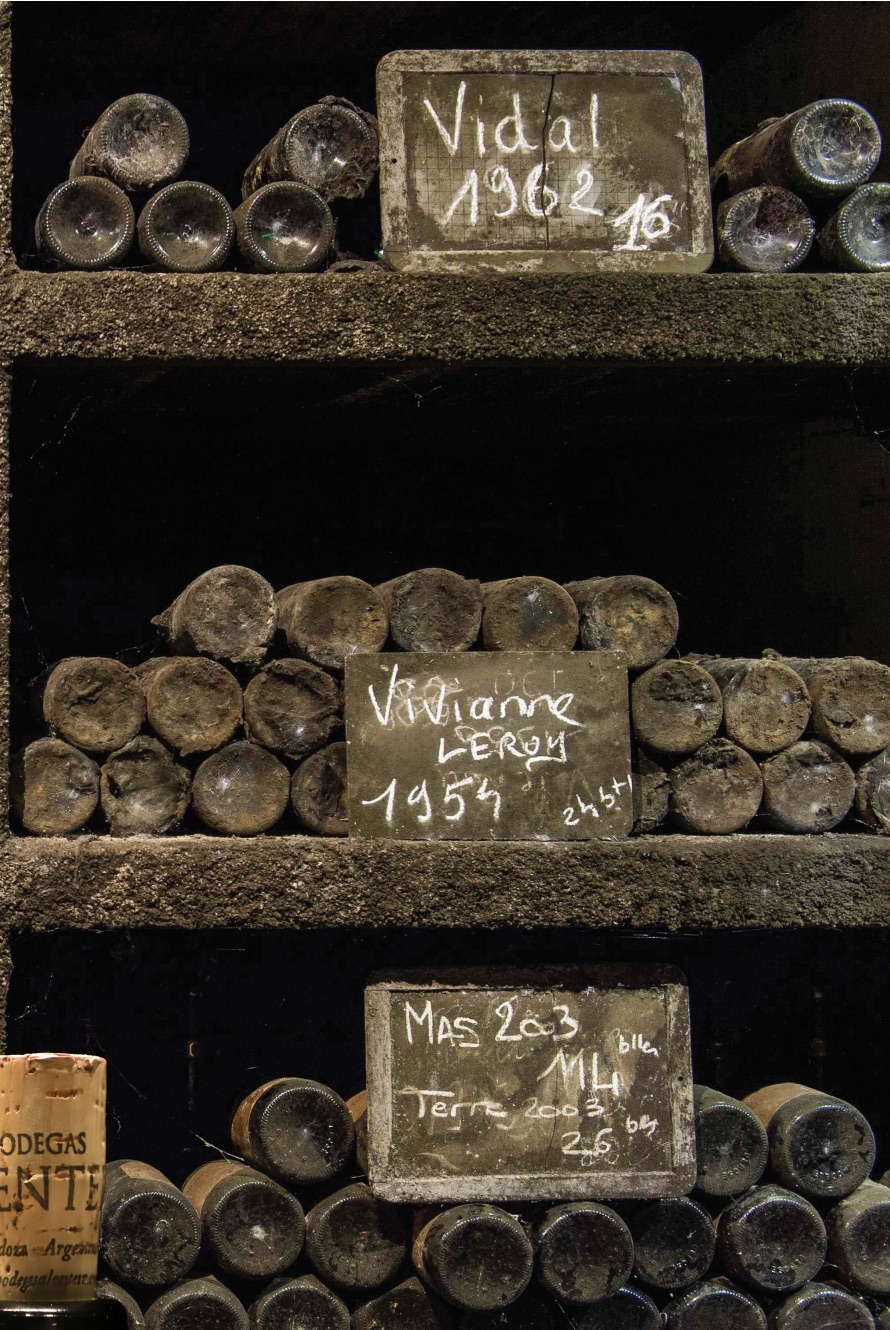
“A great collection should reflect the owner’s personality — there’s little point in owning cases you never want to open,” says Thomas. “Although our palate changes over the years. You may like one bottle today that you don’t in a few years’ time.” “Many see their wine collection as part of a broader legacy — to share and eventually pass on,” says Thomas.
When buying for future generations, he advises focusing on proven longevity, provenance and emotional significance. “Few things are more rewarding than opening a perfectly aged bottle with family, years down the line,” Thomas concludes.
Many see their wine collection as part of a broader legacy — to share and eventually pass on. — Thomas Delande, Private Client Sales Executive at Ripley Wines